Generating the molecular data AI needs—and sharing it with the world
Molecular Futures: AI for Molecular Science


The molecules we need
A new class of antibiotic that stays ahead of drug-resistant bacteria. A protein that seeks out cancer cells while sparing healthy ones. An enzyme that helps manufacture everyday materials more sustainably. What if, instead of searching for molecules like these, scientists could design them?
Led by Nobel laureate and Sarafan ChEM-H architect Carolyn Bertozzi, Molecular Futures is Stanford’s initiative to advance molecular science for human and planetary health. The initiative’s AI for Molecular Science effort brings artificial intelligence and molecular science together to make this kind of design possible.
The next molecular revolution
At the turn of the millennium, sequencing a single human genome cost roughly $100 million. Today, it can cost less than $100. A single modern sequencer now generates more data in two days than the entire Human Genome Project.
Now artificial intelligence is catalyzing another transformation. In 2020, an AI system called AlphaFold tackled a problem that had challenged scientists for decades: predicting a protein's three-dimensional structure from its sequence. That breakthrough, which earned a share of the 2024 Nobel Prize in Chemistry, depended on something researchers had spent nearly half a century building: the Protein Data Bank, an open repository of high-quality protein structures.
Both of these advances mark milestones on the path from reading biology to designing it. But neither shows what actually happens when molecules go to work—when proteins bind to partners, enzymes drive chemical reactions, and signals pass from one cell to the next. That vast, dynamic world of molecular activity is where much of biology happens.
To design molecules for specific purposes, AI must learn the rules of that world: how well a molecule does its job, and how even small changes can make it better or worse. Yet that information has never been collected at the scale or consistency AI requires. Without it, discovery still depends on slow, costly trial and error—searching rather than designing.
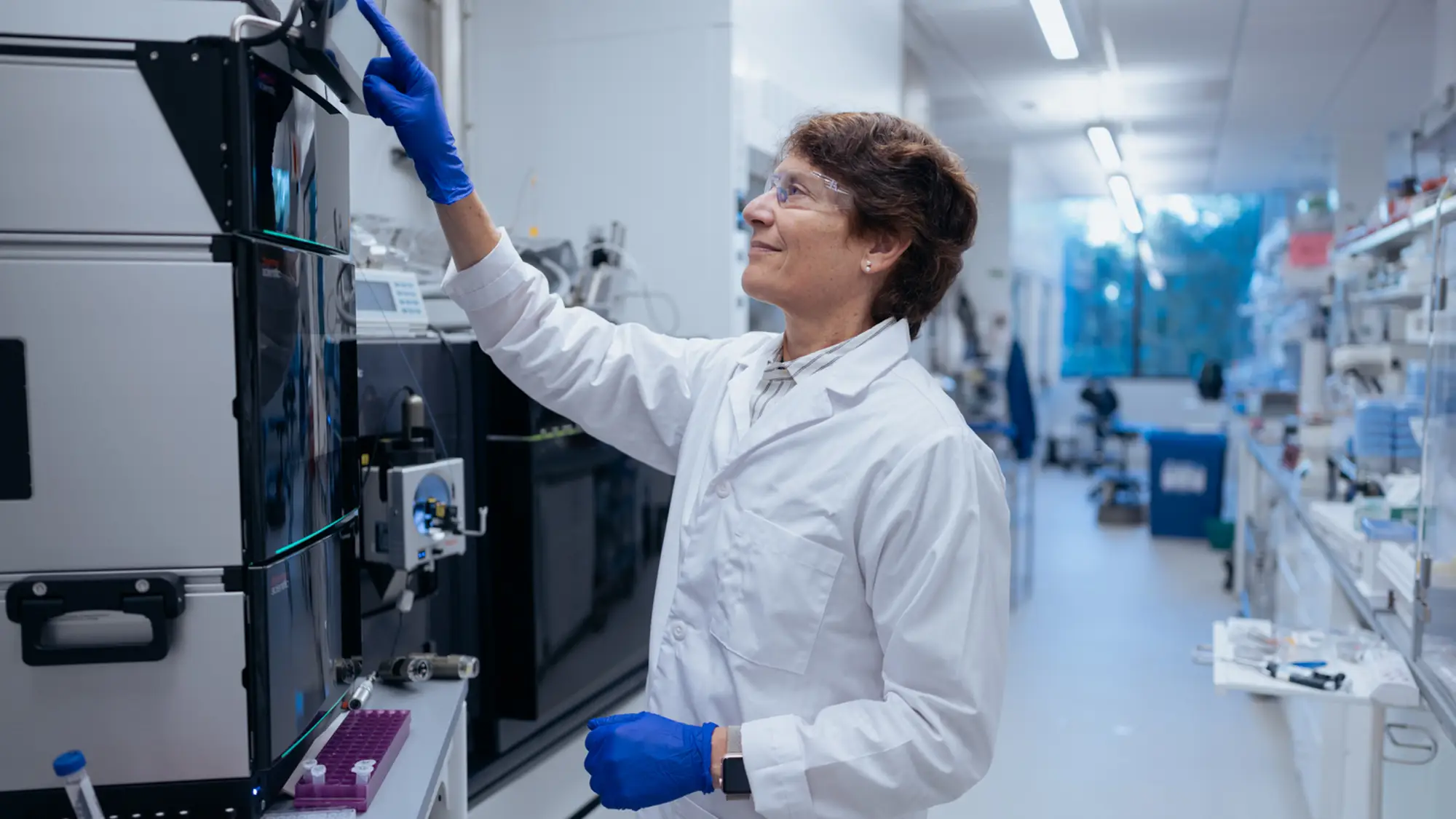
Carolyn Bertozzi. Photo: Andrew Brodhead
Building the data AI needs
To supply that missing data, Sarafan ChEM-H has launched the Functional Protein Observatory, the signature effort of Molecular Futures. It will create an open, standardized, large-scale database linking protein sequence and structure to function.
Led by Stanford bioengineer Polly Fordyce, the observatory builds on her lab’s microfluidic platforms, which characterize protein variants up to a thousand times faster than conventional methods, at lower cost. Her lab has already generated tens of millions of standardized measurements. What sequencing did for genetic data, the observatory aims to do for protein function.
The goal is not simply more data, but better data: consistent, quantitative measurements designed from the outset for AI. And while some companies are racing to build their own private protein databases, Fordyce is committed to keeping this one open. Shared with researchers worldwide, this resource could provide a new foundation for understanding how protein sequence and structure give rise to function—and ultimately for designing proteins with desired capabilities.
With enough high-quality functional data, those what-ifs could be designed rather than found: antibiotics that stay ahead of resistance, proteins that target cancer with precision, enzymes for cleaner manufacturing. “It’s hard for me to think of a field it wouldn’t transform,” Fordyce says.
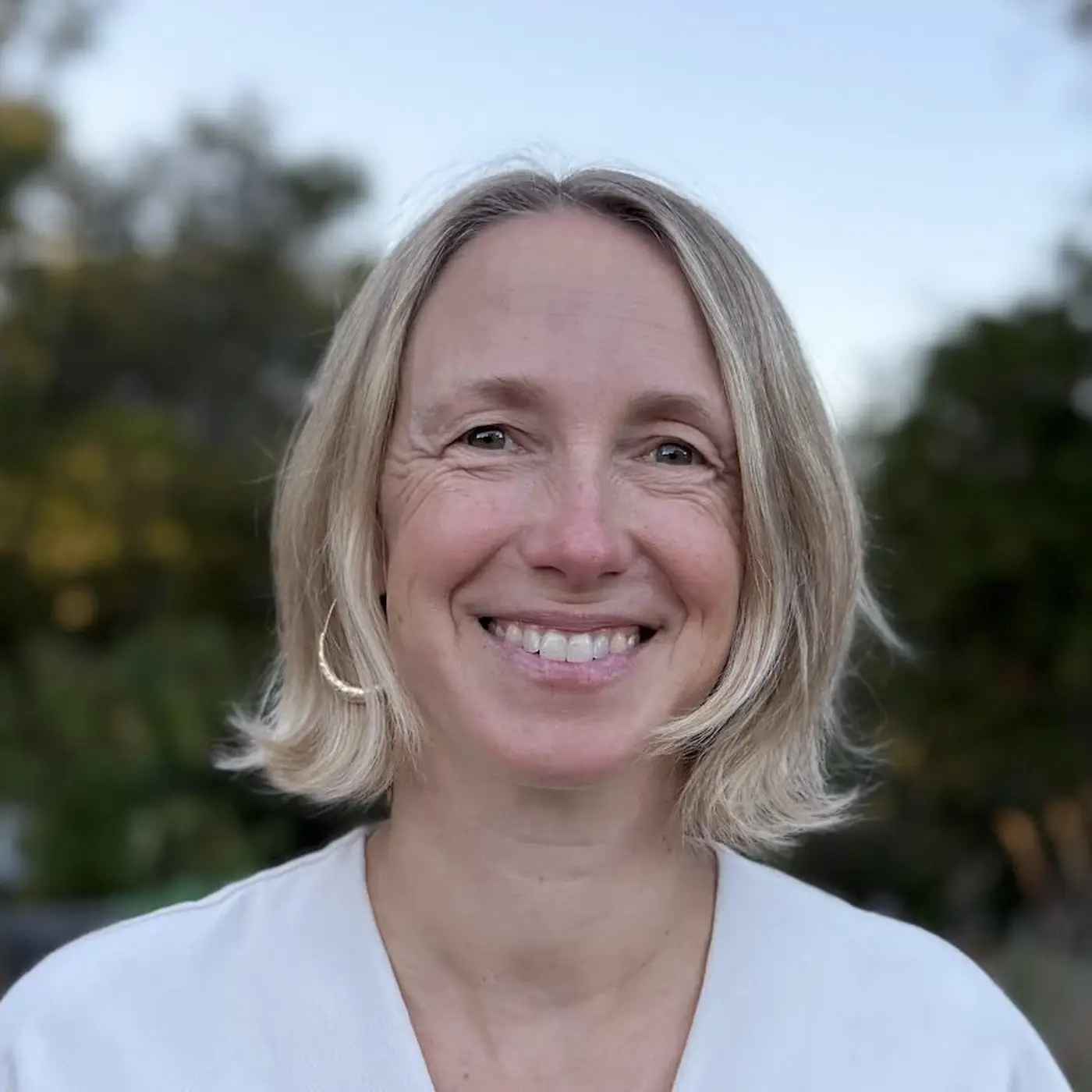
Polly Fordyce. Photo courtesy: Polly Fordyce
Scaling discovery through the Nucleus
In a typical university lab, advanced instruments are costly to maintain, and the expertise to run them often leaves when a graduate student or postdoc moves on. Sarafan ChEM-H’s shared research facilities, known as the Nucleus, offer resources rarely found in academia: technologies ranging from high-throughput screening to cryo-electron microscopy, access to the X-ray light sources at SLAC National Accelerator Laboratory, and staff scientists who bring a combined 120 years of industry experience.
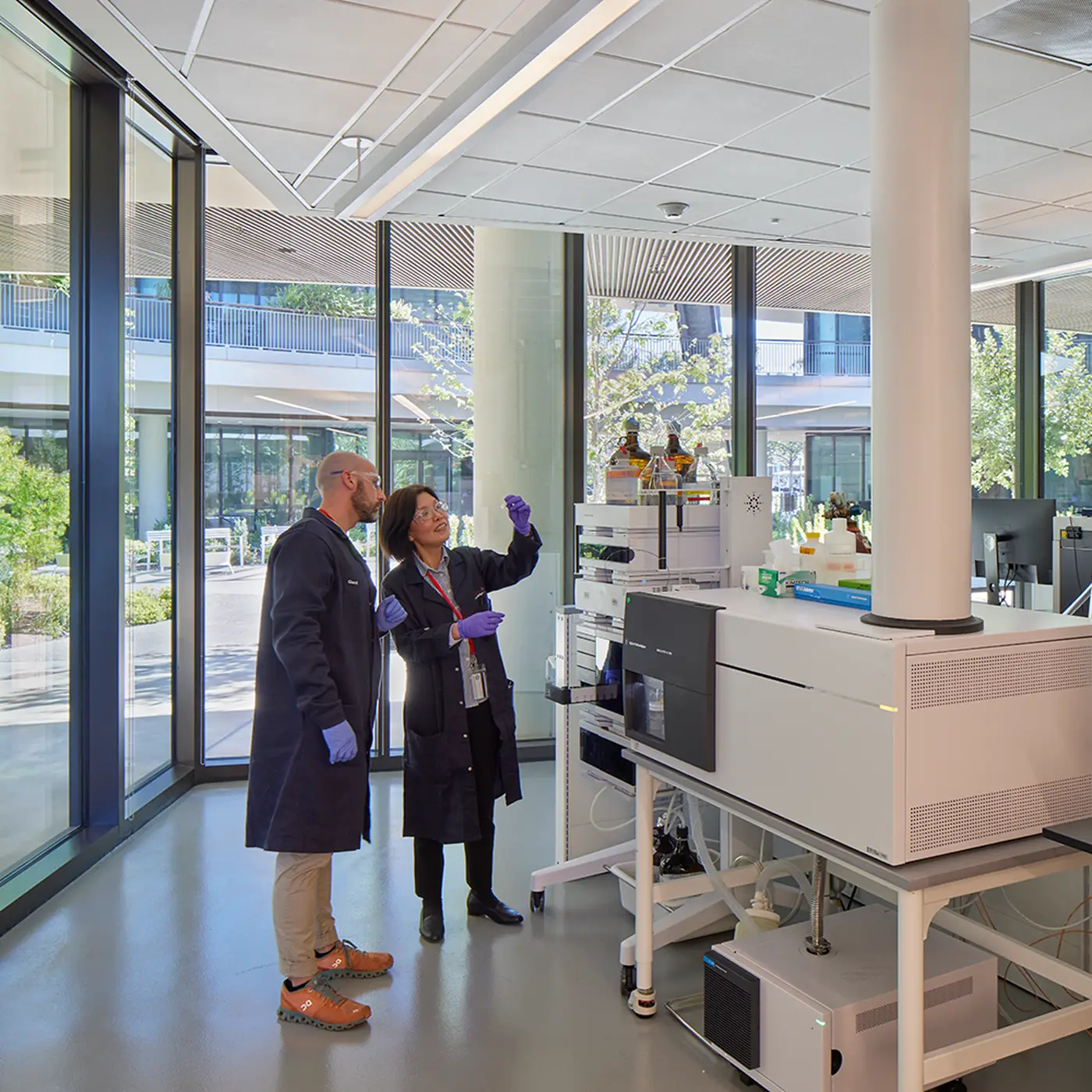
Inside the Nucleus at Sarafan ChEM-H. Photo: Bruce Damonte
They work alongside faculty as scientific partners, pairing the expertise of a pharmaceutical lab with the freedom of academic research.
“We’re able to take risks where a pharmaceutical company generally would be risk-averse,” says Mark Smith, a medicinal chemist who leads drug discovery at the Nucleus after years at Roche. “We can get to work on cutting-edge science that no one else in the world is looking at.”
When a Stanford Medicine lab needed to map an antibody at the center of its multiple sclerosis research, Nucleus scientist Daniel Fernandez trained postdoc Tobias Lanz in X-ray crystallography—work that helped reveal how the Epstein-Barr virus can trigger the disease. Lanz, now a Stanford faculty member, uses those techniques in his own lab today.
The Nucleus also helps technologies like Fordyce’s grow from a single lab into resources for an entire field. Through Molecular Futures, it will expand its capacity for high-throughput data generation and computational analysis, so that experiments across Stanford produce data that is standardized, comparable, and ready for AI. It is also designed to stay at the leading edge, bringing new technologies to campus as science demands them.
Scientists fluent in molecules and machine learning
The scientists who generate molecular data and the scientists who build AI models have largely worked apart—one reason the data AI needs is still missing. Molecular Futures will bring them together as equal partners, alongside researchers and clinicians who understand the chemistry and biology behind the data. Working side by side, they can aim data generation where it matters most: at the gaps where models are weakest, and at the questions whose answers could become a new medicine or material.
Stanford already has leaders working across these boundaries. Fordyce and geneticist Alice Ting are developing new ways to measure biology at scales suited to AI. Brian Hie, the Dieter Schwarz Foundation SDS Faculty Fellow, shows what dual fluency makes possible: a computer scientist who retrained as a biochemist, he built an AI method that can redesign proteins. Tested on a COVID-19 antibody that performed poorly against newer variants, it improved the antibody’s potency 25-fold. Molecular Futures will recruit additional faculty who bridge experimental and computational science and connect them with AI researchers across the university.
The initiative will also prepare a new generation of scientists to work across that divide. Its graduate training program in AI for Molecular Science is designed to bring together students from across the Schools of Humanities and Sciences, Engineering, and Medicine, and the Stanford Doerr School of Sustainability. Building on Sarafan ChEM-H’s proven Chemistry/Biology Interface program, it will give students exposure across the experimental and computational sciences so they can work fluently at the intersection of these fields.

Brian Hie. Photo courtesy: Stanford Engineering

The opportunity
The molecules that could help meet some of our greatest challenges have not yet been designed. Much of the data needed to design them has not yet been gathered.
Stanford is positioned to do both. Molecular Futures builds on the interdisciplinary model Bertozzi has established through more than a decade of leadership at Sarafan ChEM-H, which has recruited 18 faculty members, trained more than 150 graduate students, and helped move discoveries into three first-in-human clinical trials.
It also builds on a remarkable legacy in AI. In the 1960s, Stanford researchers, including Nobel laureate Joshua Lederberg, created one of the first AI systems, which helped chemists identify the structures of unknown molecules. Today, Stanford remains a world leader in AI, with expertise that spans the university—from computer science to the Stanford Institute for Human-Centered Artificial Intelligence.
Philanthropic partners can help carry Sarafan ChEM-H’s proven model into a new era. Their support can recruit pioneering faculty, train the next generation of scientists, expand the shared infrastructure that makes discovery possible, and fund the research that will generate the data AI needs—and share it with the world.
The problems are molecular. So are many of the solutions.
Invest in the people who will build molecular futures
Every part of this vision depends on people who can work across the boundary between molecules and machine learning.
$6 million
Endowed professorship
Investing in exceptional faculty ensures Stanford will push the frontiers of molecular science and AI. Endowed professorships provide lasting support for the people whose ideas drive discovery, who pioneer entirely new fields like this one, and who train future scientific leaders.

$21 million
AI for Molecular Science Graduate Training Program
Name and endow a new kind of graduate program, one that trains scientists fluent in both molecules and machine learning. Building on the proven model of Sarafan ChEM-H's Chemistry/Biology Interface program, it will welcome students in their first year of graduate school, helping Stanford recruit the strongest doctoral candidates. Across three cohorts, students will study data science and computation alongside chemistry and biology and learn from the start to work fluidly across disciplines.

$7 million
Named graduate training cohort
Endow a cohort of 10 students in the AI for Molecular Science Graduate Training Program and support them through their early years of training. This gift will provide the rigorous coursework, mentorship, and professional development that prepare students to work across molecular science and computation. Among Chemistry/Biology Interface fellows, the peer connections formed through cohort training have sparked new collaborations across labs.
$2 million
Endowed graduate fellowship
Give an emerging scientist the freedom to pursue bold research across traditional boundaries. Endowed fellowships provide graduate students with the time needed to follow original ideas and take intellectual risks. Because fellows bring their own funding, they often become the connectors who spark new collaborations across labs—exactly what this field needs.

Invest in the tools that make discovery possible
Designing molecules depends on data that doesn’t yet exist and on shared resources built to generate it at scale.
$5 million
Nucleus launch fund
Keep Stanford at the leading edge as the tools of molecular science evolve. This named endowed fund will allow the Nucleus to bring new technologies and expertise to campus in perpetuity, from scaling up promising methods developed in Stanford labs to adding capabilities like advanced computing. As large-scale data generation becomes central to discovery, it will ensure that faculty and students across Stanford have the resources to pursue their boldest ideas.

$5 million, expendable
Functional Protein Observatory
Help build the open resource that protein design has been missing. Over the next five years, foundational philanthropic support will establish the observatory and strengthen its ability to attract partners in industry and science, while ensuring that the protein function data it generates is shared with researchers worldwide.

Let’s talk about the future
Emily Shimizu
Director of Development and Strategic Initiatives
Dean of Research, External Relations
emilyshimizu@stanford.edu