18
1
new faculty recruited to Stanford
Building the next frontier of molecular science at Stanford

Every revolution in biology has begun the same way: with a breakthrough in molecular insight, and with the courage to invest in it before the world understood its value. When the Haber-Bosch process industrialized ammonia synthesis in the early 1900s, it ended wars fought over scarce fertilizer and unlocked the crop yields that now feed nearly half the world's population.
When next-generation sequencing democratized genomics, it dropped the cost of a human genome from $100 million to under $100, and generated more data in two days than the entire Human Genome Project produced in over a decade.
These were not isolated advances. They are the pattern: bold, early investment in molecular science creates platforms that transform medicine, engineering, and sustainability for generations.
That pattern is repeating right now, at a speed the field has never seen. And AI is providing the backdrop for a once-in-a-generation opportunity to revolutionize the field of molecular science. Seizing it will not come from a single lab or a single discipline.
It requires coordinated infrastructure that connects chemists, biologists, engineers, clinicians, and computational scientists under one roof, organized deliberately, and fueled by philanthropic vision bold enough to match the moment.
With Nobel Laureate and architect of Sarafan ChEM-H Carolyn Bertozzi leading the effort, Stanford is uniquely prepared to build the interdisciplinary infrastructure required to translate molecular science into transformative real-world impact. Molecular Futures is the next chapter—and Stanford is prepared to lead it forward.

The main goal is to make discoveries and gift them to humanity.And those discoveries and that knowledge stays with humanity long after you are gone.”Carolyn Bertozzi, Nobel Laureate in Chemistry, 2022
Molecular Futures is built around two great domains—human health and planetary health—accelerated by a third force that will make everything else move faster: AI for molecular science.
These are not three parallel programs, but one interconnected system. The microplastics accumulating in the human body arrived from the environment. The protein- engineering tools that could design a breakthrough cancer therapy are the same tools that could engineer an enzyme to degrade plastic waste. And a ProteinGPT built with the help of large-scale standardized molecular data could serve countless applications across domains. Molecular Futures is designed to capture exactly that convergence.
For over a decade, Sarafan ChEM-H (Chemistry, Engineering, and Medicine for Human Health) has built Stanford into one of the world’s leading centers for molecular human health research.
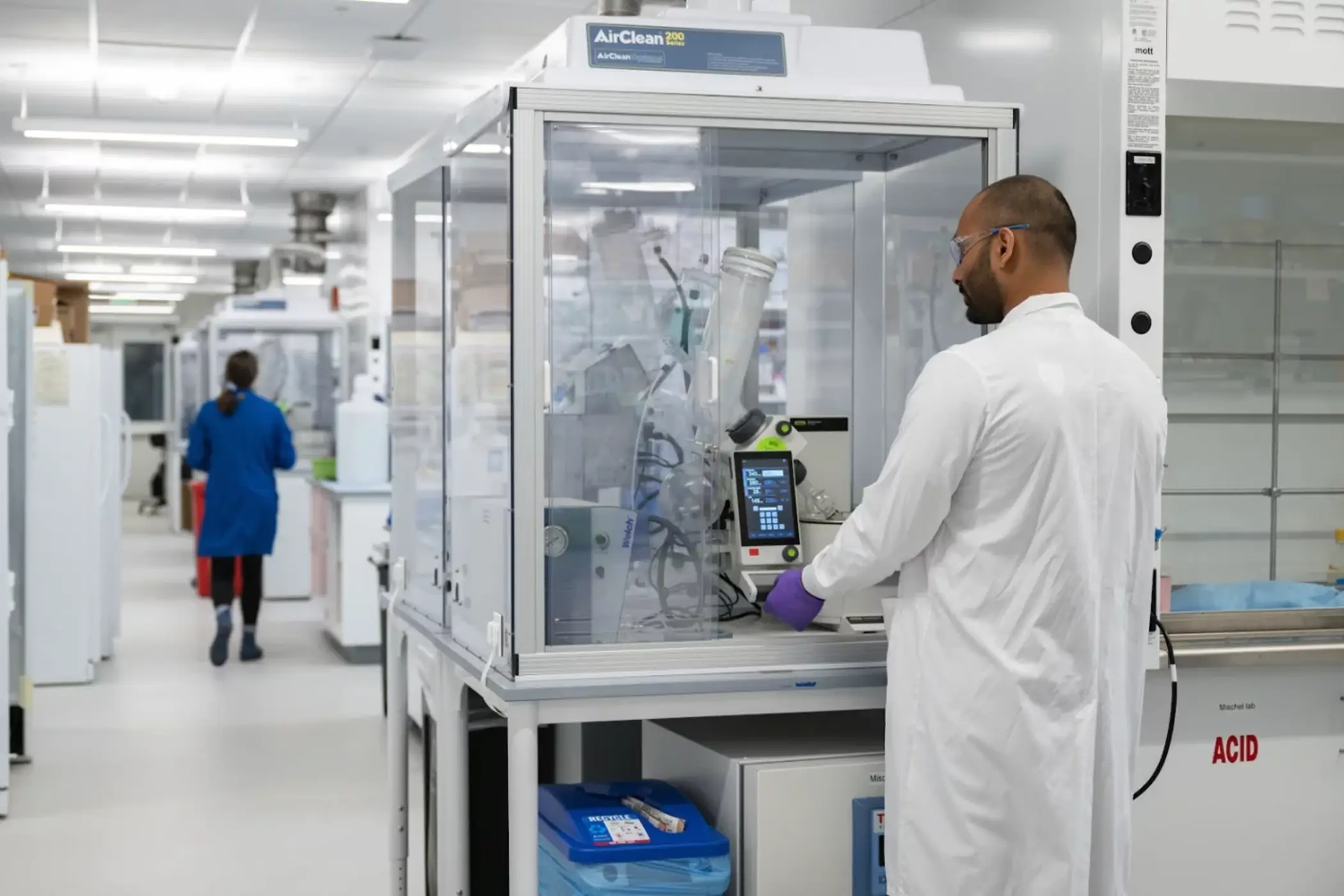
Photo: Sarafan ChEM-H
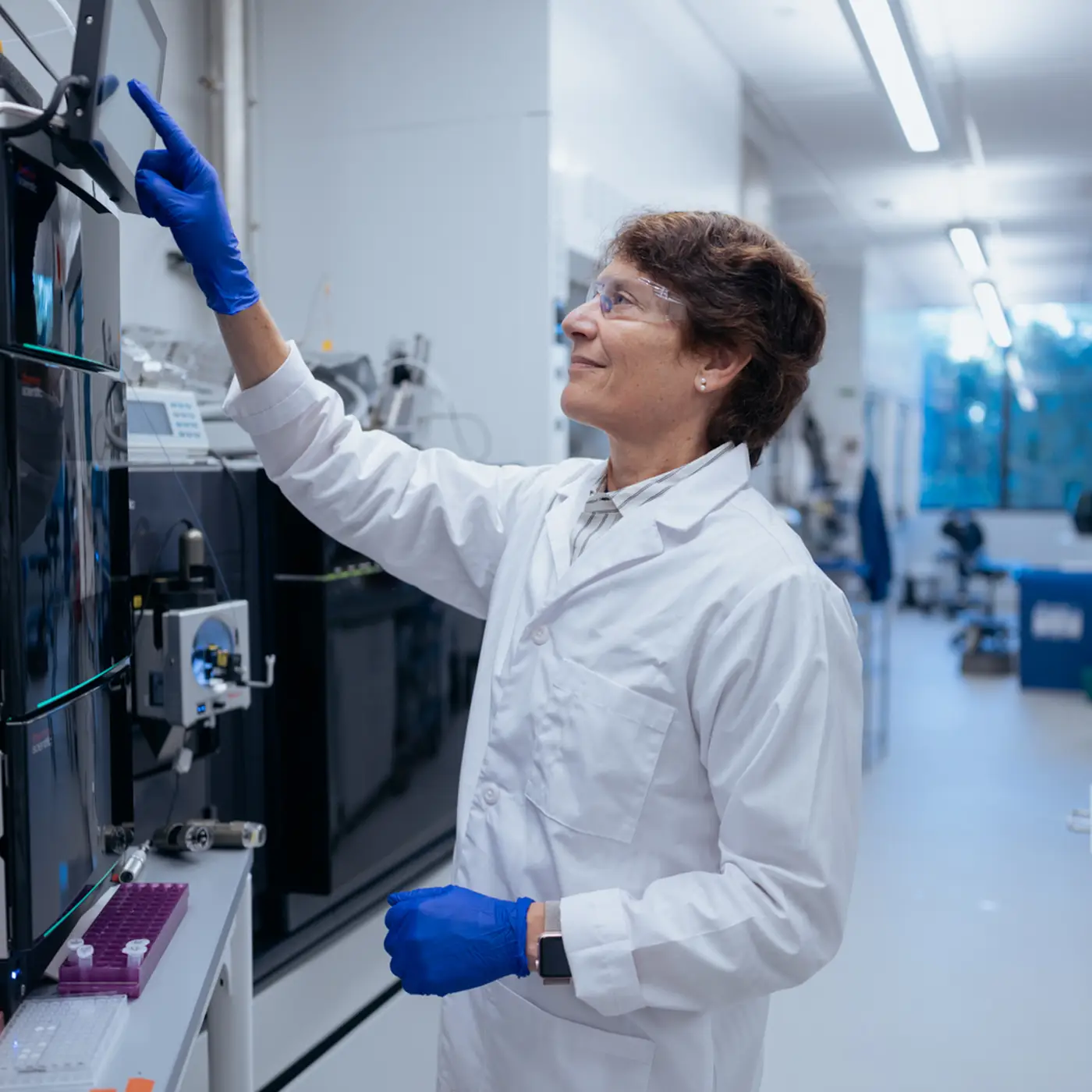
The model is simple and it works: recruit exceptional scientists, surround them with shared infrastructure, and train the next generation of interdisciplinary investigators. The results speak for themselves—a needle-free topical vaccine, chemotherapy in pill form, and the identification of a viral cause for multiple sclerosis, a discovery that reframes how the world understands and treats the disease.
new faculty recruited to Stanford
graduate students trained
years of industry experience on staff
Molecular Futures does not start from zero. It builds directly on this proven foundation and extends it.
The next decade’s work extends ChEM-H’s proven model beyond the human body, to the molecules in our food, our environment, our atmosphere, and our materials that determine the health of the planet itself.

Carolyn Bertozzi has already convened faculty working groups across the Stanford Doerr School of Sustainability, the School of Humanities and Sciences, and the School of Engineering to identify the research questions where Stanford's molecular science capabilities can have the most decisive impact.
A Planetary Health Hub will be the institutional home for this work: bringing together faculty who are currently scattered across schools, building shared research platforms, training a new generation of interdisciplinary scientists, and establishing Stanford, unambiguously, as the world's convening center for molecular planetary health.
Molecular Futures is powered by a new engine. AlphaFold demonstrated the template: large, standardized molecular datasets, paired with the right computational tools, can compress decades of discovery into years.

That lesson is not narrow; it applies across every frontier of molecular science the initiative touches. With direct access to specialized resources like those at SLAC National Accelerator Laboratory, and proximity to the AI capital of the world, Stanford is singularly positioned to capitalize on this watershed moment. The ability to generate, structure, and interpret molecular data at scale will be the decisive advantage of the next generation of researchers—and Molecular Futures will be built to treat computation and data science as co-equal drivers of discovery.

The Functional Protein Observatory is where this vision becomes concrete. AlphaFold, honored with the 2024 Nobel Prize in Chemistry, taught the field to predict protein structure. The next grand challenge, designing proteins with the functions we need, requires exactly what AlphaFold needed to succeed: a vast, high-quality, open-source database of training data. That database does not exist yet. Whoever builds it first will shape the next decade of biology.
Led by Institute Scholar Polly Fordyce, whose microfluidic platforms characterize protein variants up to 1,000 times faster and cheaper than conventional methods, the Observatory will build it.
The Observatory will serve as a central hub, fabricating and distributing cutting-edge tools to a global network of micro-observatories; standardizing data collection across every site; and maintaining the world's only open-source, megascale database of protein function. It will host iterative algorithm competitions that draw the global AI research community directly into the effort to build what may become ProteinGPT, an AI capable of designing proteins on demand.
The applications are not hypothetical. They are active, and they span both domains of Molecular Futures at once: novel cancer therapies, next-generation antibiotics, enzymes engineered to degrade environmental plastics, and new materials for sustainable manufacturing. The Functional Protein Observatory is the single point where AI, molecular science, and the world's most urgent problems converge.
Across human and planetary health, Molecular Futures operates through one unified set of programs that constitute its institutional engine. These are not administrative categories on an org chart. They are the specific mechanisms by which philanthropic investment becomes scientific breakthrough, and scientific breakthrough becomes real-world impact.
The single most important investment Molecular Futures can make is in people. Over the next five years, the initiative will recruit a cohort of 3–5 new faculty who sit at the intersection of molecular planetary health and computational methods, drawn from across the Schools of Humanities and Sciences, Engineering, Medicine, and the Doerr School of Sustainability.
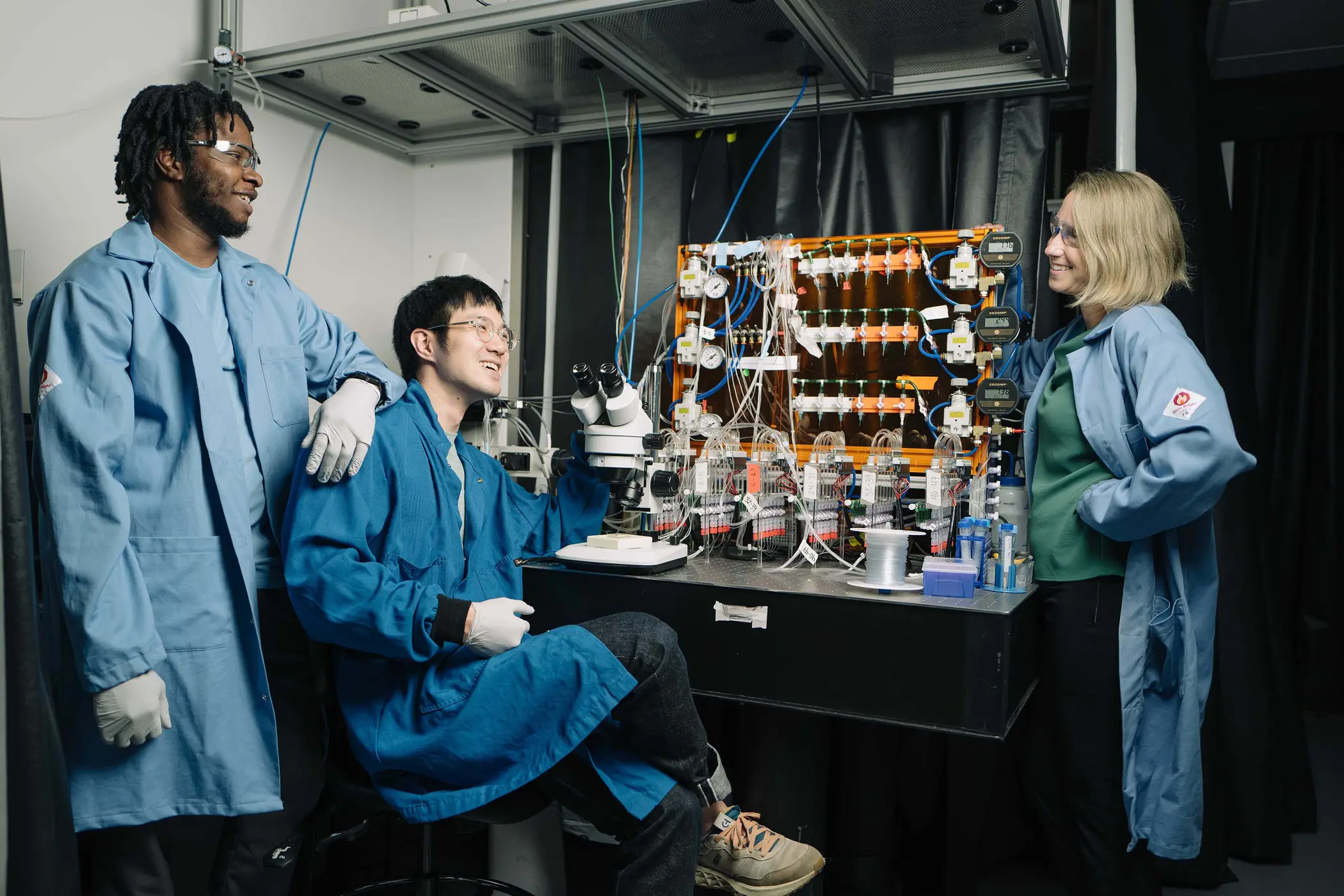
This first cohort will anchor two emerging frontiers: chemistry applied to planetary health, and computation applied to molecular science.
These are not conventional hires. Molecular mavericks are defined by bold, unproven research directions with the potential for outsized, far-reaching impact—the kind of risk that federal funding rarely underwrites, and philanthropy is uniquely positioned to enable. They will sit together in a shared space in the Chemistry Building, hold joint appointments across their home departments, and serve as the intellectual core of both the Planetary Health Hub and AI for Molecular Science.

What if we were fluent in the language of biology? Brian Hie is on a mission to translate life’s code, predict viral evolution, and revolutionize medicine.

Paul Mischel’s groundbreaking research is reshaping our understanding of the cancer genome.

Give the world one vaccine and we’re immune to one disease. Accelerate the creation of new medicines and you give the world a different future.
The Chemistry/Biology Interface program trained a generation of scientists who now lead labs and companies around the world.
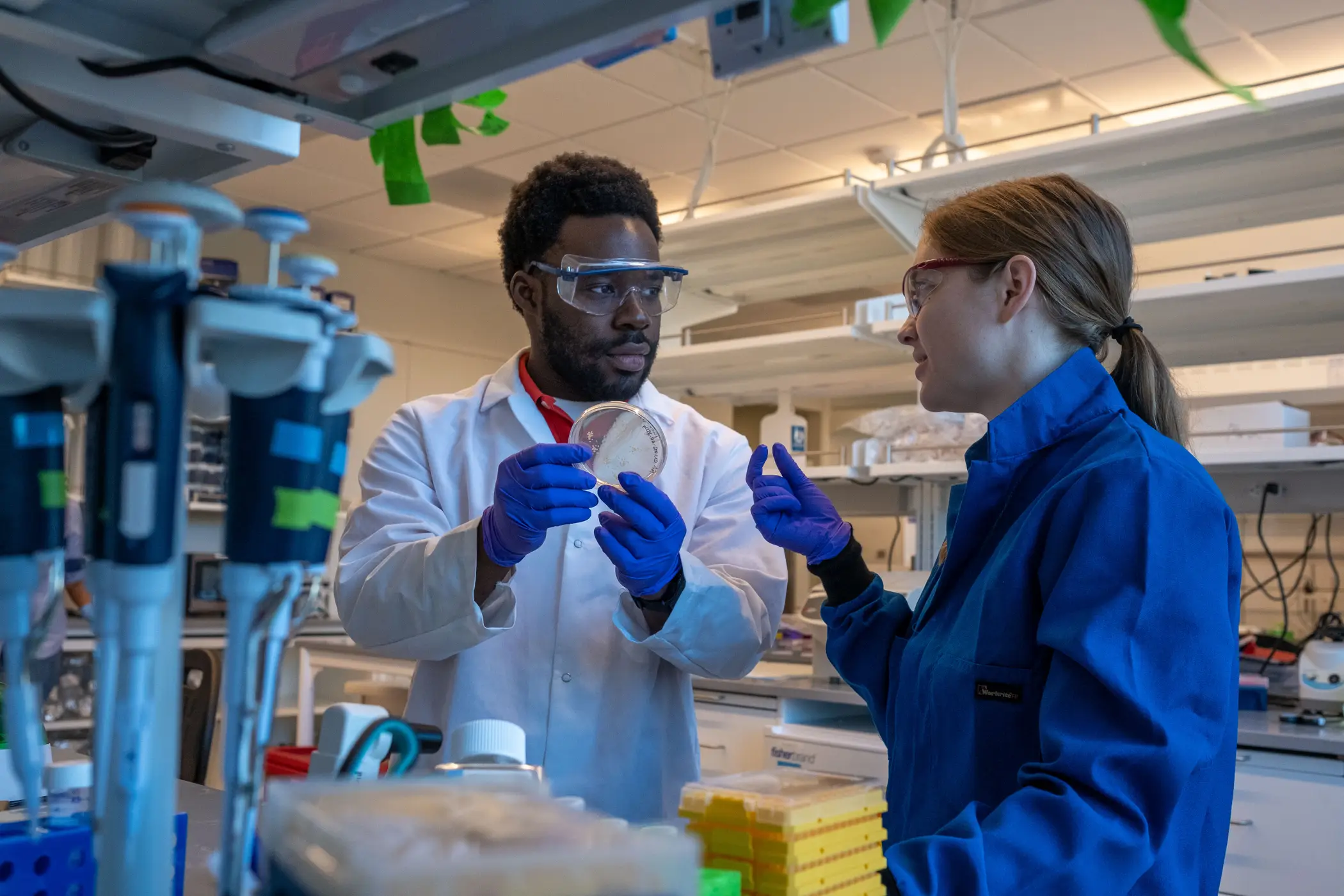
Molecular Futures will launch two new graduate training programs in CBI’s image—one at the human/environmental interface, and one in AI for Molecular Science—preparing students to move fluidly across molecular biology, chemistry, environmental science, and computation. Within five years, these programs will enroll 30 or more students, with fellowships extended to partner schools across Engineering, Medicine, Humanities and Sciences, and the Doerr School.
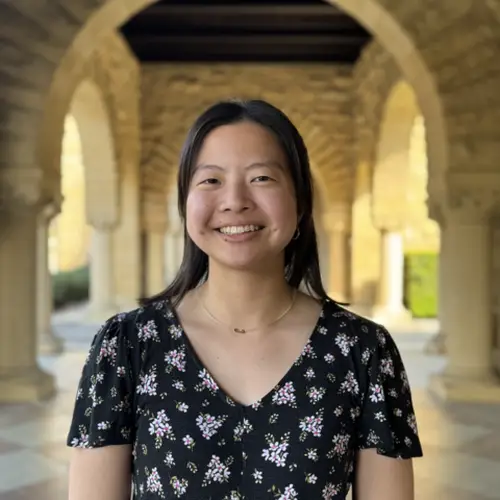
Former varsity fencer Casey Chan studies the chemical shields plants use to protect themselves. She hopes to use that knowledge to develop safer pesticides.

How a research setback led to a discovery that just might transform lives.
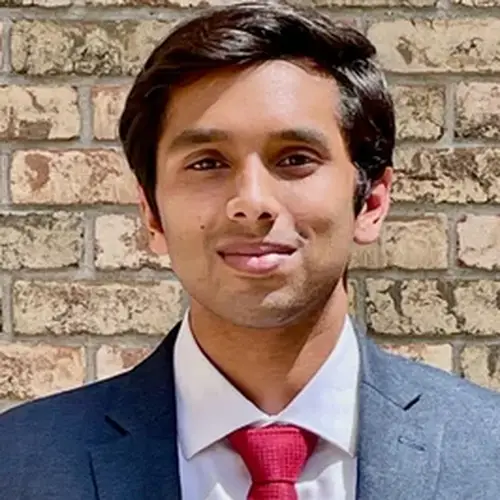
The method, which combines a ChatGPT-like large language model with information about a protein’s 3D shape, could make it easier and faster to develop better medicines for infectious diseases, cancer, and other conditions.
At the heart of Sarafan ChEM-H sits the Nucleus, a suite of shared research facilities staffed by scientists with a combined 120 years of industry experience across protein engineering, structural biology, metabolomics, and high-throughput screening.
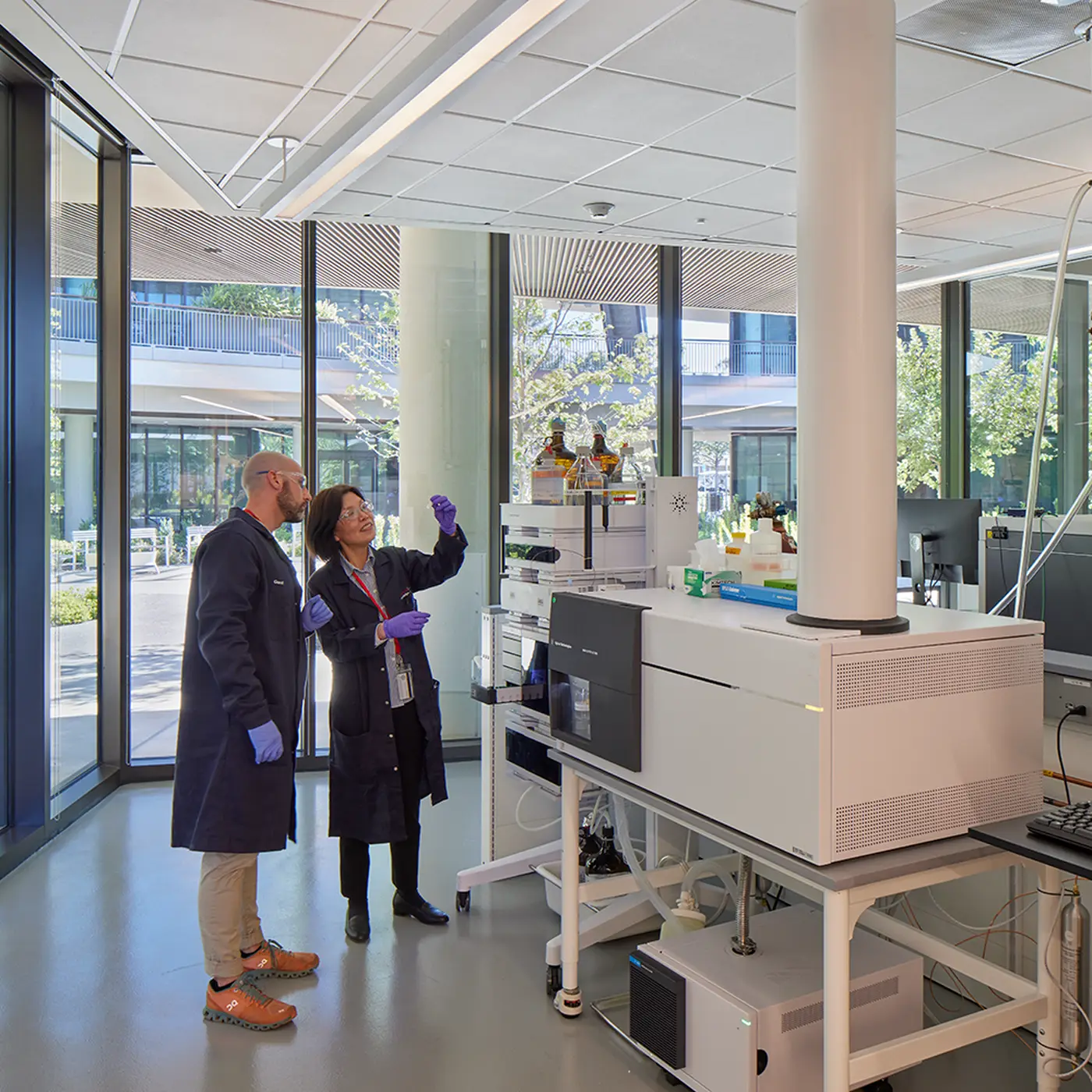
The Nucleus is what separates ChEM-H from a collection of independent labs: it is the shared resource that turns a single lab's discovery into a therapeutic platform, and that shortens the path from basic science to real-world application from decades to years. Molecular Futures will extend the Nucleus's capabilities—integrating high-throughput data generation, bioinformatics, and computational analysis—to serve the full research agenda of the initiative, across both human and planetary health.

The method, which involves adding a small chemical tag onto existing drugs, could make it possible for chemotherapy patients to take pills rather than receive IV infusions.
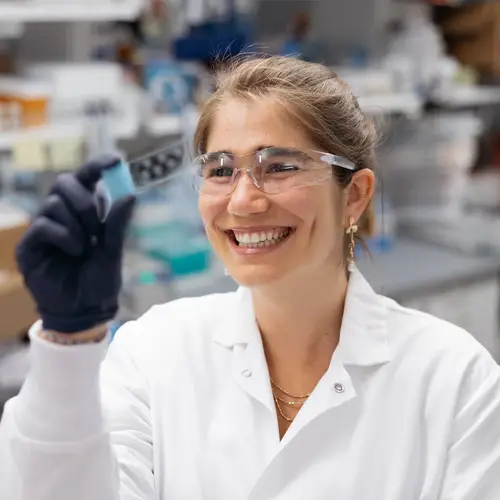
With support from industry experts embedded at Stanford, Héloïse Hoffmann, ’26, is developing a therapy to treat her rare genetic disorder and others like it.
The biggest scientific opportunities are too large for any single investigator’s lab budget—and too unproven, at first, for federal or industry funding.

Molecular Moonshots are concentrated, time-limited philanthropic investments in the highest-potential projects across the Molecular Futures portfolio. Each Moonshot uses early philanthropic capital to prove the concept and generate the preliminary data needed to unlock federal, industry, and foundation partnerships at scale. This is the mechanism by which donors can turn bold ideas into real-world impact.
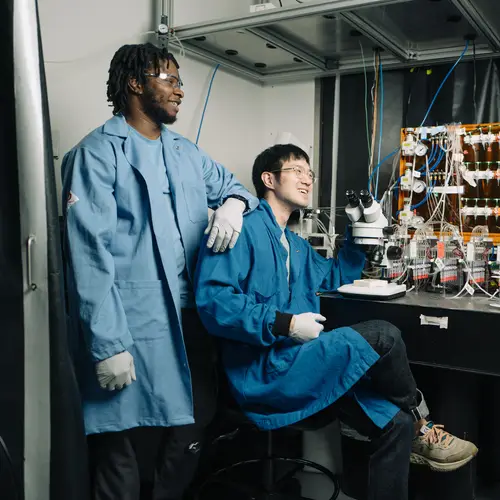
Polly Fordyce is building a global engine for protein discovery—one that could help researchers harness AI to create new medicines, materials, and climate solutions.

Every great scientific breakthrough begins the same way: with visionary investment in fundamental knowledge, made before the outcome is certain. The Haber-Bosch process. Antibiotics. DNA sequencing. The internet. Each began with patient capital, brilliant minds, and an institution willing to bet on transformative possibility.
The convergence of AI and molecular science is not a distant future; it is happening now in labs around the world. Climate change, antibiotic resistance, and aging populations are demanding molecular solutions that do not yet exist. The AI tools that could design the proteins, materials, and medicines we need are within reach, but only if we build the data foundations they require.
Stanford is poised to seize this moment, with Carolyn Bertozzi’s Nobel-laureate leadership, our proven ChEM-H model, world-class faculty across every discipline, and access to unique resources like SLAC and AI industry leaders. What we need is partnership with visionaries who understand that the greatest gift to humanity is knowledge that endures—discoveries that belong to humanity long after any of us are gone.
That is what Molecular Futures offers: a founding role in the infrastructure that will define molecular science for the next 50 years.

 toWhat’s next?
The molecules that define our future are waiting to be discovered. Stanford is where that work will happen.

Learn more about how Stanford is generating the molecular data AI needs—and sharing it with the world.
Bringing artificial intelligence and molecular science together to advance molecular science for human and planetary health.