Just say who
Getting caught with drugs at school can brand a student for years. A Stanford researcher is testing whether a connection with a trusted teacher can interrupt that trajectory.
Story tags:

Rhana Hashemi. Photo: Julien James
Share this story
It’s a fall morning, and the freshman sitting across from Rhana Hashemi, MS ’22, in the empty cafeteria of an Oakland public high school has just been caught using drugs. Hashemi, a PhD candidate in social psychology at Stanford, has come not with punishment but with questions.
She hands the girl a list of values and asks her to name which ones matter most to her. Then a harder question: What kind of person does she want to be?
“Besides all the bad stuff I’m doing,” the girl says, “I want to get better grades, go to college to study astronomy, and be a good example to my little siblings.”
At most schools, getting caught with drugs doesn’t prompt a conversation like this one. It sets off a chain of consequences. Drug offenses are a comparatively small share of school discipline incidents nationwide, but they’re more likely to trigger severe consequences such as expulsion. Studies have also shown that Black and Latino students consistently receive harsher punishment than white students for comparable offenses. The infraction becomes a label, and the label has a way of becoming a trajectory.
Hashemi wants to know whether that trajectory can be rerouted.
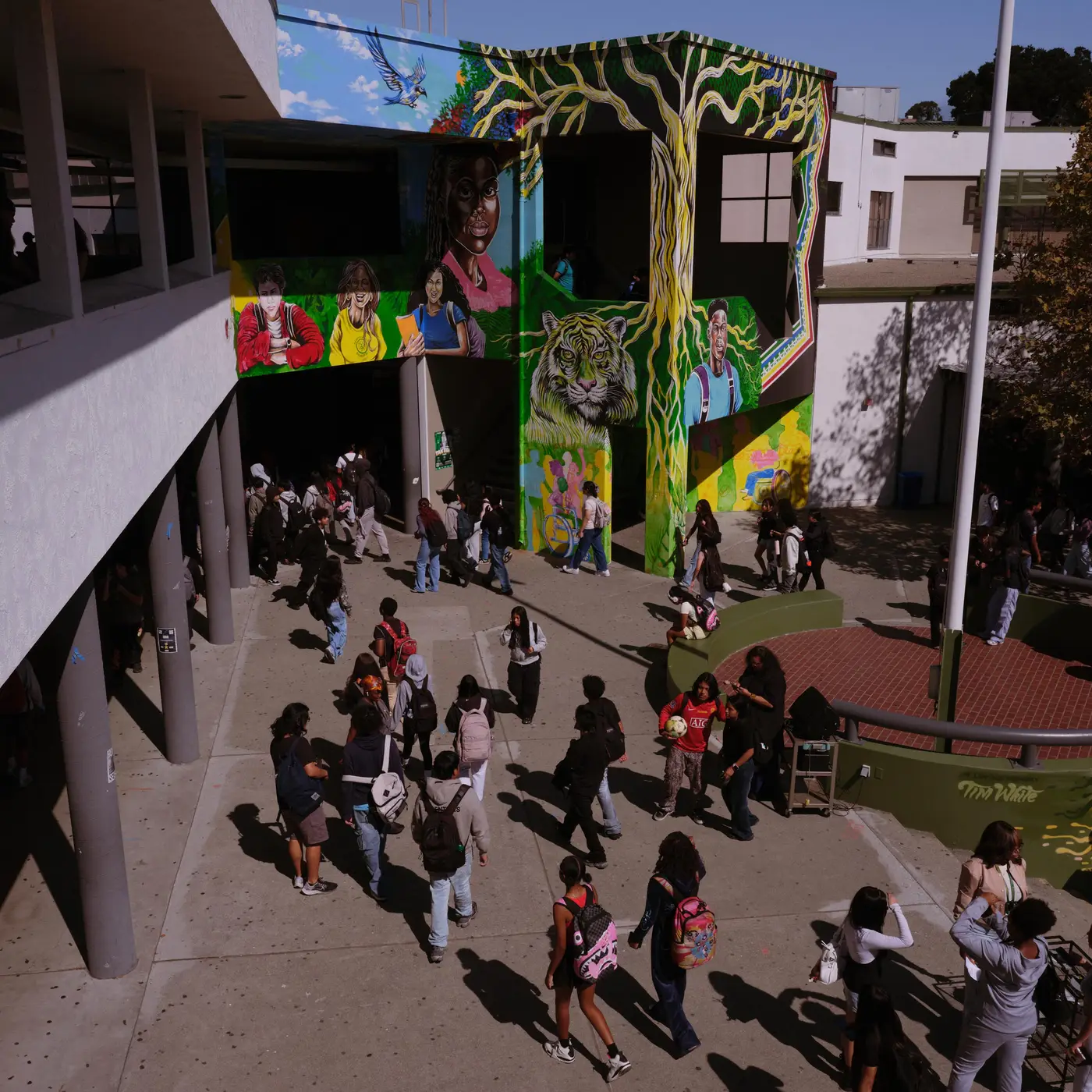

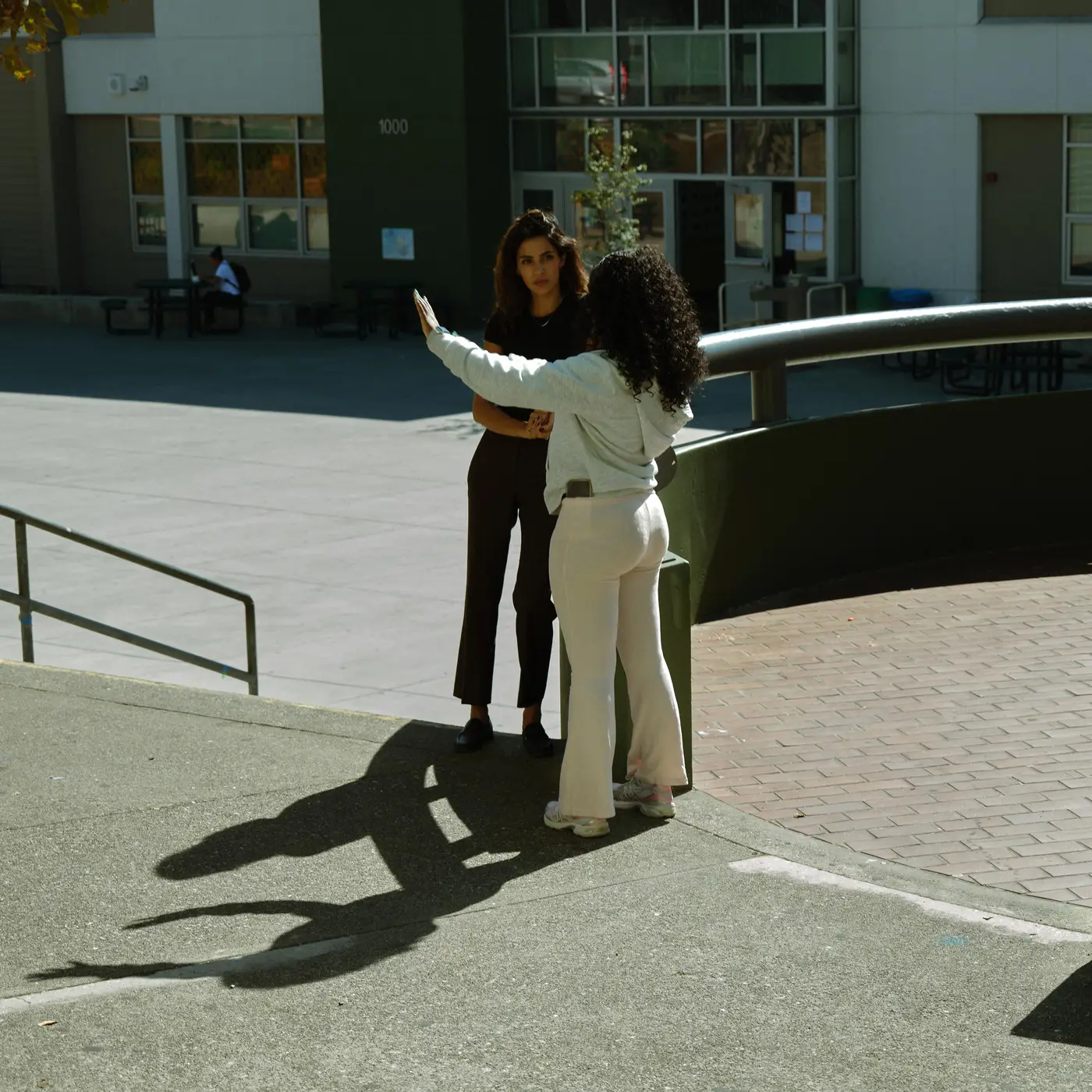
Hashemi and a volunteer student reenact what a typical meeting looks like. (To protect the privacy of the students in her program, an actual meeting is not shown.) Photos: Julien James


With the support of Stanford Impact Labs, an accelerator for scaling solutions to major societal challenges, and in partnership with the Oakland Unified School District, she’s testing an evidence-based intervention. It grew out of work by Stanford psychologists Greg Walton, ’00, and Jennifer Eberhardt and their former doctoral student Jason Okonofua, PhD ’15, now a professor at Brown University. The three wondered what might happen if a student’s first day back from juvenile detention began not with a disciplinary file but with a different story.
In their intervention (called Lifting the Bar), students reflected on their values and aspirations, heard from other students about how they built productive relationships with teachers and administrators, and gave advice of their own to future students. At the end, they selected an educator to receive a brief letter introducing the student in their own words—what they hoped for, what they feared, and how a trusted adult could help them succeed. The goal wasn’t to erase the past. It was to keep it from becoming the student’s entire identity.
Walton’s model saw a drop of 40 percentage points in recidivism among teens reentering school from juvenile detention. Hashemi, working in Walton’s lab, is testing whether that same mechanism works for kids who get caught with drugs at school. Through the rest of the year, she’ll be studying the effectiveness of her program, called More Than That, across several measures: students’ self-reported drug use; relationship to school and self-esteem after three months; changes in drug use infractions, attendance, and grades.
The goal isn’t just to shift a student’s sense of who they are. It’s to shift how a teacher sees that student. By aligning both on a positive, shared vision of who the student is and who they can become, Hashemi hypothesizes, better relationships and behavior will follow.
After an initial pilot with 25 students, Hashemi is now conducting a randomized controlled trial. Even before the results are in, she’s seeing signs of impact. Teachers have reported that the letters give them a fuller picture of their students, and a clearer sense of how to help.
As one principal told her, “I’ve been struggling to figure out how to support this kid who keeps getting in trouble. And now, in black and white, this letter tells me exactly what the student needs and wants.”
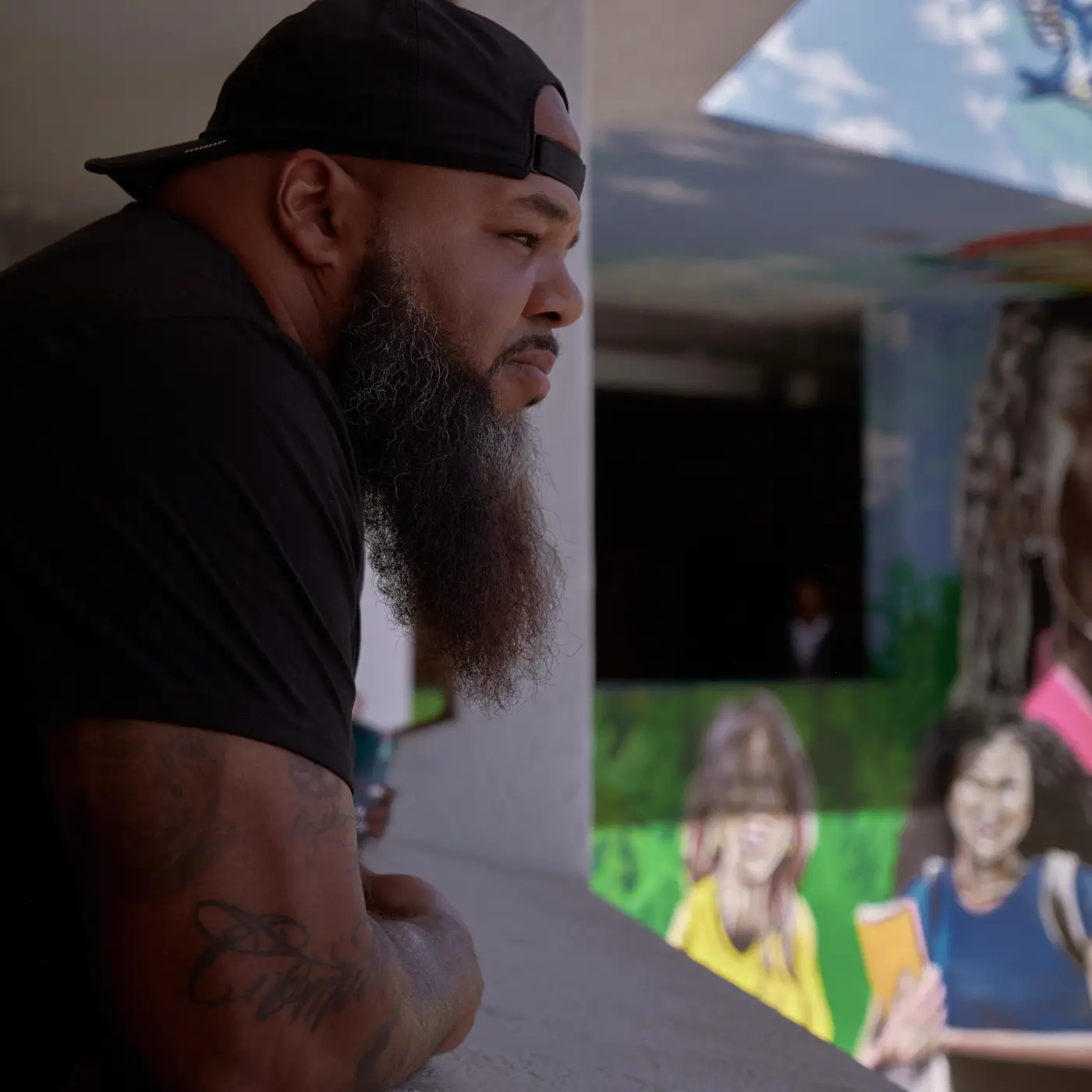
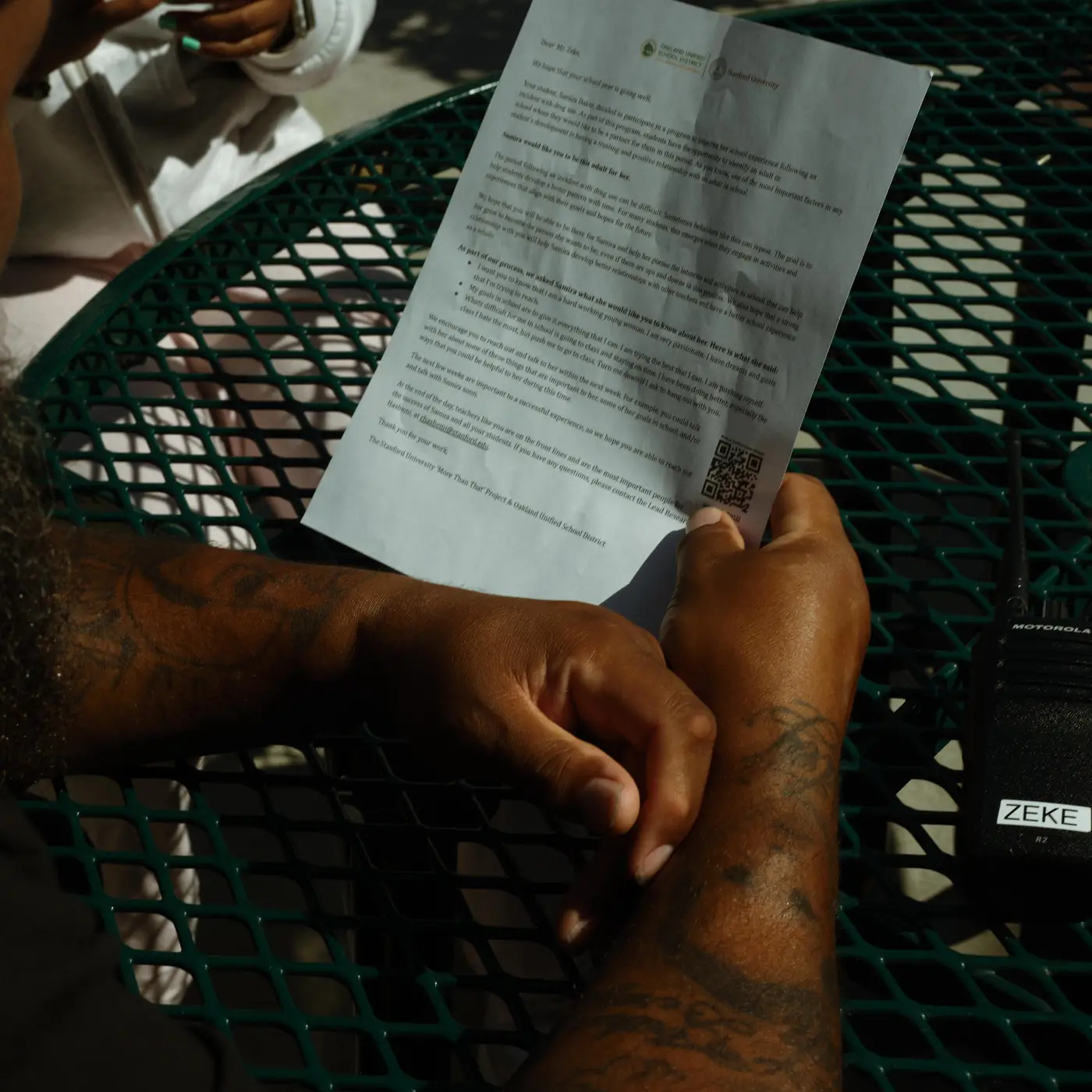

Photos: Julien James
Back in the cafeteria, the girl’s answer is a familiar one. Nearly every student Hashemi works with points to a relational goal: making their family proud, being there for people they love. Hashemi is careful not to define progress strictly as abstinence from drugs. Success can mean many things. It might mean graduating.
After some prodding, the girl acknowledges that she admires her Spanish teacher. She tells Hashemi she’d be willing to share some of her values, goals, and challenges the teacher might help with—a key element in the intervention. Then Hashemi helps to restate the girl’s goals as declarations. When Hashemi says, “You will be a good example to your little siblings,” the girl cries softly.
Teachers who receive a letter are asked to do just one thing: read it. Some shed tears, Hashemi says. Others report being overwhelmed with gratitude, shock, and joy. “What you’re doing is shifting the school culture and climate,” one former teacher told Hashemi of the experience.

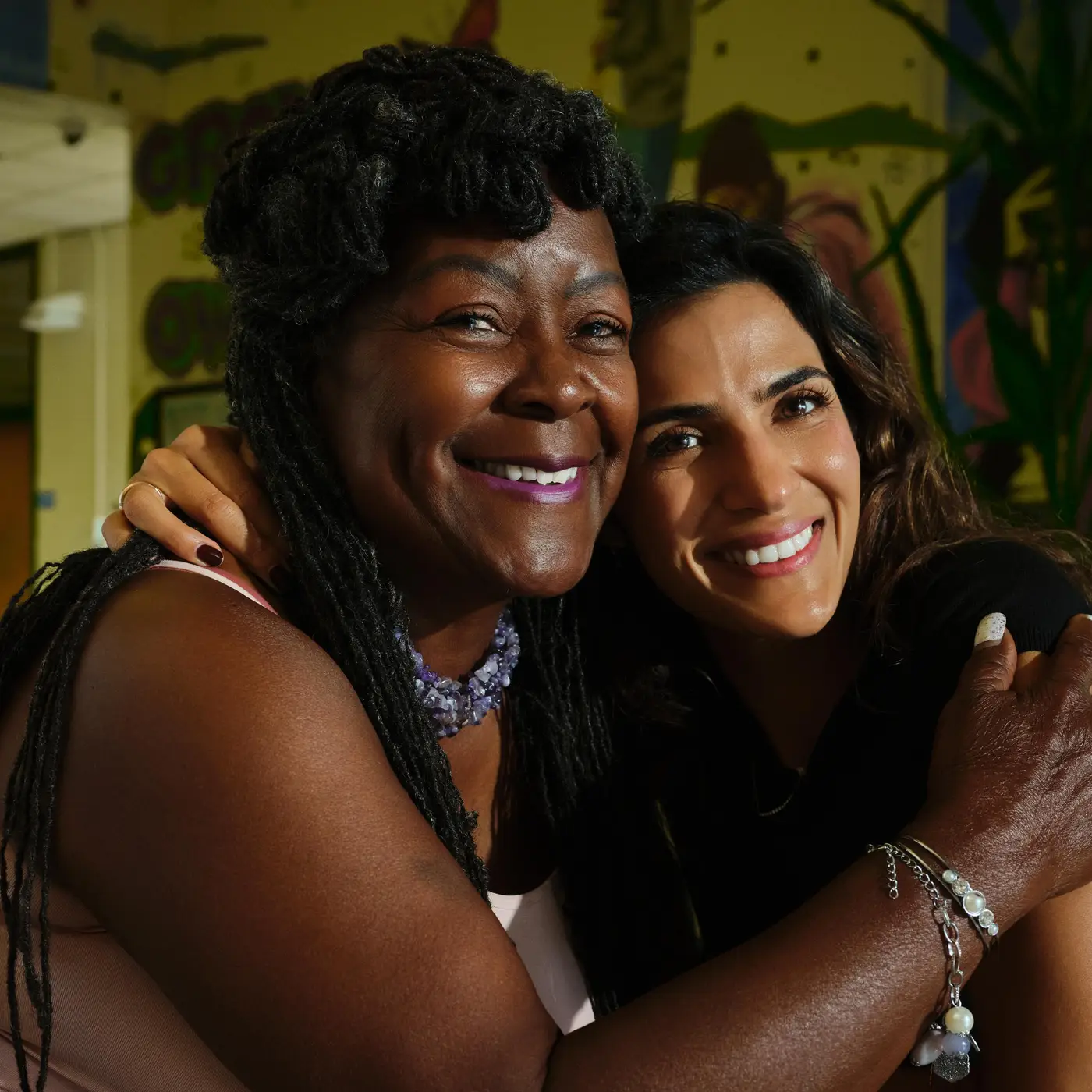
The letter creates hopein teaching and learning that maybe wasn’t there before, and helps teachers set aside preconceived notions and biases.”Hattie Tate, director of the Juvenile Justice Center for the Oakland Unified School District
Hattie Tate and Rhana Hashemi. Photo: Julien James
Hashemi knows the power of such transformations firsthand. As a teenager, a disconnection from school led her to binge drinking, which gave way to a Xanax and cannabis dependency.
“If you’ve been labeled as a bad kid, you’re going to act like a bad kid,” she says—a phenomenon she calls an “identity cage.”
It was a teacher who believed in her in community college that pushed Hashemi to reconsider her identity and who she could become. These days, she’s the one on the other side of the cafeteria table, working with students to forge a new path forward.
Ms. Hattie Tate is central to the development of Lifting the Bar and its initial evaluation. She’s a former teacher and principal, and board member of the California Association of Urban School Administrators.
Greg Walton, ’00, is a professor of psychology and the Michael Forman University Fellow in Undergraduate Education.
Jennifer Eberhardt is the Morris M. Doyle Centennial Professor of Public Policy, the William R. Kimball Professor at the Graduate School of Business, a professor of psychology, and faculty director of Stanford SPARQ.
Jason Okonofua, PhD ’15, is an associate professor of cognitive and psychological sciences at Brown University.
The impact
Why it matters
Getting caught with drugs at school often leads to the harshest discipline schools hand out. Punitive responses tend to push already vulnerable students further from school rather than toward support. Rhana Hashemi’s study explores a different approach, grounded in research showing that the negative labeling that follows a disciplinary incident can block trusting, positive relationships between teachers and students. The program gives students a platform to say who they truly are and who they want to become. It enlists the support of an educator who sees their authentic goodness and can reflect back this hopeful, possible self. Interventions that harness the power of identity and strengthen these critical relationships, rather than relying on discipline alone, offer a promising, low-cost way to interrupt the slide that can follow a single infraction and keep it from defining a student’s future.
The opportunity
Hashemi’s study is one of many early-stage, evidence-based projects backed by Stanford Impact Labs, which helps researchers move promising interventions out of the lab and into schools and communities. Philanthropic support positions Stanford Impact Labs to fund high-risk, high-potential research in the social sciences that can be difficult to fund fully through conventional models—research that’s capable of reshaping how schools nationwide respond to students in crisis.